
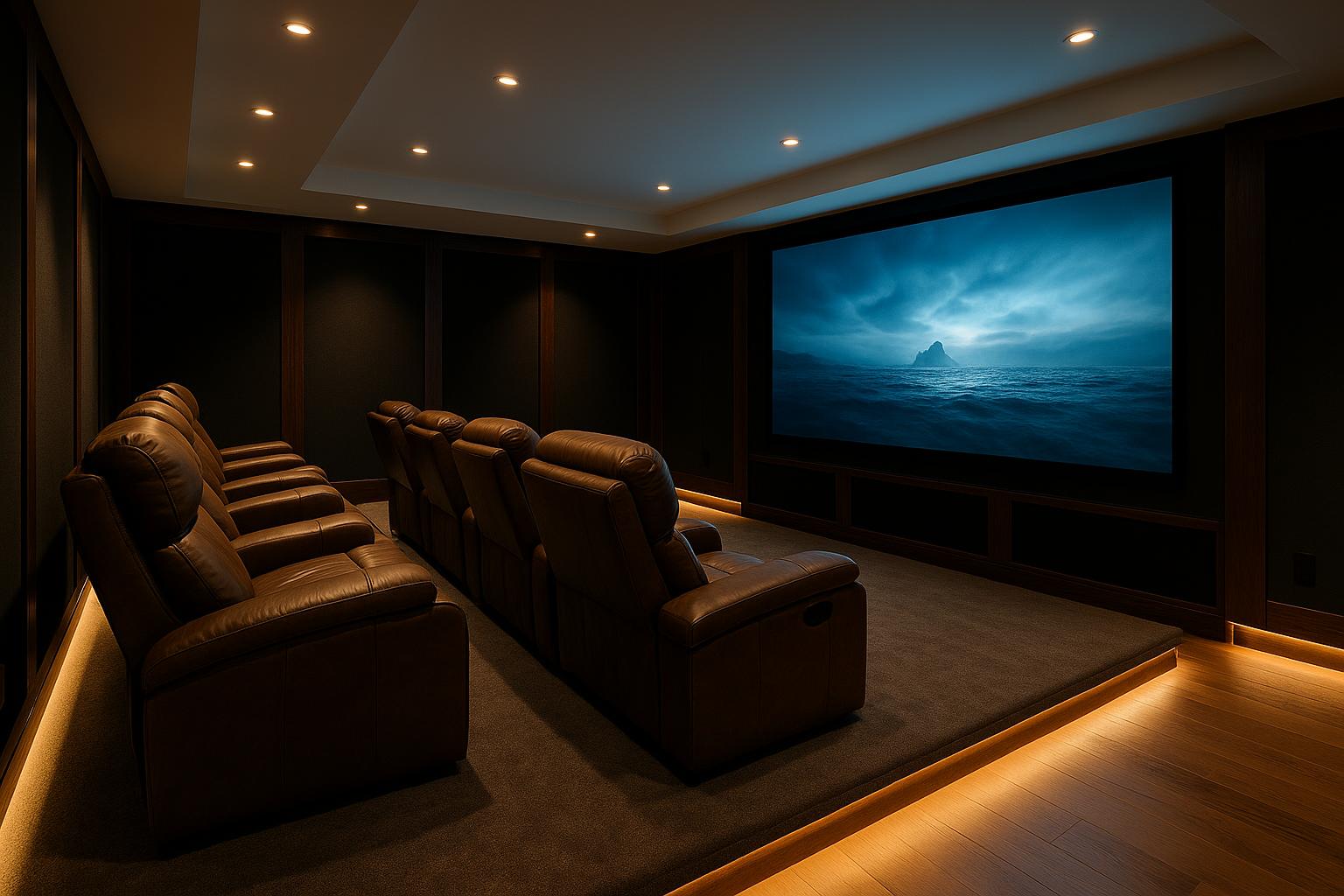
Why La Jolla Homeowners Are Building Basement Home Theaters
Streaming services, surround sound systems, and massive 4K projectors have changed the way we watch movies at home. But cramming all of that into a living room with windows, foot traffic, and ambient noise? It rarely delivers the experience you're hoping for.
That's why more La Jolla homeowners are turning to their basements. A lower-level space offers natural darkness, separation from the rest of the house, and the kind of layout flexibility that makes a dedicated home theater not just possible — but genuinely impressive.
But building a home theater in your basement isn't as simple as mounting a screen and adding a couch. There are real construction, design, and technical decisions that determine whether your theater feels like a cinematic escape or an expensive afterthought.
Here's what you need to think through before the project begins.
Start With the Room Layout
Not every basement footprint is ideal for a home theater, but most can be adapted with the right planning. The key considerations are:
- Room dimensions: A rectangular room typically works best. You want enough depth for proper viewing distance from the screen and enough width for comfortable seating rows.
- Ceiling height: Most basements in La Jolla have ceilings between 7 and 9 feet. That's workable for a theater, but you'll need to account for any ductwork, beams, or plumbing that may reduce clearance — especially if you're planning a projector mount.
- Entry and exit points: Think about how people will enter and leave the theater without disrupting the viewing experience. A rear entry is ideal.
During the design phase, your contractor should walk the space with you and identify any structural elements that could affect screen placement, speaker positioning, or seating layout.
Soundproofing Makes or Breaks the Experience
This is the detail most homeowners underestimate. A great sound system in an un-soundproofed room creates two problems: the audio quality inside the theater suffers from echo and reverberation, and the rest of the house gets blasted with bass and dialogue at all hours.
Proper soundproofing for a basement home theater typically involves:
- Insulated interior walls: Adding sound-dampening insulation between the theater and adjacent rooms keeps noise contained.
- Decoupled walls and ceilings: Using resilient channels or staggered stud construction prevents sound vibrations from traveling through the framing.
- Solid-core doors: A hollow-core door lets sound pass through almost as easily as an open doorway. A solid-core door with proper weatherstripping makes a dramatic difference.
- Acoustic panels: Strategically placed panels inside the room absorb reflections and improve audio clarity, especially for surround sound setups.
If you're investing in a quality audio system, investing in soundproofing is non-negotiable. Otherwise, you're hearing your room more than your speakers.
Lighting Control Is Essential
One of the biggest advantages of a basement theater is the natural absence of sunlight. But you still need to plan your artificial lighting carefully.
Recessed dimmable lights are the standard choice. You want the ability to bring lights up when people are moving around and dim them completely during a movie. Consider adding LED strip lighting along stair risers or the base of seating platforms for safety without disrupting the screen.
If your basement has any windows — even small egress windows — you'll want blackout treatments. Even a small amount of light bleed can wash out a projected image and undermine the immersive feel of the room.
Choose the Right Display and Audio Setup
This is where personal preference and budget come into play, but a few guidelines help:
- Projector vs. large-format TV: Projectors offer the biggest screen size and the most theater-like feel, but they require a darker room and more ceiling clearance. A 75- to 85-inch TV is a simpler option that still delivers a stunning picture in a smaller space.
- Surround sound configuration: A 5.1 system (five speakers and a subwoofer) is the most common starting point. For larger rooms, a 7.1 or Dolby Atmos setup with ceiling-mounted speakers adds another layer of immersion.
- Pre-wiring: This is critical. Running speaker wire, HDMI cables, and power behind the walls during construction is far easier and cleaner than retrofitting later. Your contractor and AV installer should coordinate before drywall goes up.
Seating and Comfort Details
Theater seating has come a long way. Reclining theater chairs with cup holders and USB charging ports are widely available and surprisingly affordable. But the layout matters just as much as the furniture.
If your ceiling height allows, a raised platform for a second row of seating dramatically improves sightlines. Even a 6- to 8-inch riser makes a noticeable difference. Your contractor can build this into the floor plan and ensure the platform is structurally sound.
Other comfort details worth considering:
- A small wet bar or snack counter near the entrance
- A mini fridge built into cabinetry
- Acoustic carpet or luxury vinyl plank flooring with area rugs for warmth and sound absorption
Don't Forget Moisture and Climate Control
Even in La Jolla's mild coastal climate, basements can develop moisture issues. Before any theater construction begins, the space should be evaluated for water intrusion, humidity levels, and ventilation.
A home theater full of electronics, upholstered seating, and acoustic materials is especially vulnerable to moisture damage. Addressing any waterproofing concerns upfront — and ensuring the HVAC system adequately conditions the space — protects your investment for the long term.
Dedicated Climate Zones
Electronics and a room full of people generate heat. A dedicated HVAC zone or a mini-split system for the theater keeps the temperature comfortable without affecting the rest of the house. This is a detail that's easy to overlook during planning but difficult to fix after the fact.
Permits and Code Compliance in La Jolla
Depending on the scope of your project, basement finishing work in La Jolla may require permits — particularly for electrical work, plumbing (if you're adding a wet bar), and any structural modifications like building a seating platform or modifying egress windows.
A qualified remodeling contractor will handle the permitting process and ensure the work meets local building codes. Skipping this step can create problems when you eventually sell your home or if an insurance claim arises.
A Space Worth Building Right
A basement home theater is one of those projects that, when done well, becomes the favorite room in the house. It's where movie nights happen, where the big game feels bigger, and where your family actually wants to spend time together.
But getting it right means thinking beyond the screen and speakers. It means planning for sound, light, moisture, comfort, and construction quality from the very beginning.
At Sunrise Basement Finishers, we help La Jolla homeowners design and build home theaters that deliver on every level — from the structural work to the finishing details that make the room feel complete. If you're ready to turn your basement into something extraordinary, we'd love to talk through your vision.